Identifying Florida Trees: A Homeowner's Guide
Identifying trees in Florida—and specifically around Port Orange—matters for home safety, landscape value, and ecological stewardship. This guide teaches homeowners how to recognize trees by their leaves, bark, flowers, fruits, and winter structure, then uses local species examples to make field identification practical and repeatable. Many property owners face uncertainty when a tree shows stress, pests, or structural hazard; clear identification lets you decide whether pruning, treatment, or removal is the right next step. The article maps a stepwise pathway: leaf-based methods, bark and branching cues, reproductive features, profiles of common Port Orange species, signs of disease and pest infestation, professional service pathways, and digital tools that speed accurate ID. Throughout, we use concise rules-of-thumb, side-by-side attribute comparisons, and decision checklists so you can identify trees confidently and take the right action for health, safety, and aesthetics. Keywords such as tree identification, tree identification Florida, Live Oak identification, Sabal Palm identification, and identify trees by leaves are integrated to support both immediate field use and deeper study.
What Are the Key Features to Identify Trees by Their Leaves?

Leaves are often the simplest and most reliable starting point for tree identification because their shape, margin, venation, arrangement, and size are taxonomically informative. Leaf anatomy reveals evolutionary relationships: blade shape and venation patterns correlate with whole-family traits, while margins and arrangement narrow possibilities to individual genera or species. When you learn to read leaf features in the field, identification becomes a process of elimination—start broad with shape then refine with margin and venation cues. Below we provide a compact, four-step field approach optimized for quick identification and for capturing images that help later verification.
A practical four-step leaf ID routine:
- Inspect leaf shape to separate lobed, entire, pinnate, palmate, and needle-like leaves.
- Check leaf margin to distinguish entire, serrated, or lobed edges.
- Observe venation to tell palmate (palm-like), pinnate (feather-like), or parallel patterns.
- Note arrangement (alternate, opposite, whorled) to eliminate large groups quickly.
This stepwise routine allows a homeowner to reduce uncertainty rapidly and to decide what photos and notes to collect for verification or professional consultation. Applying the steps to common Florida species accelerates recognition and links directly to management decisions such as pruning or monitoring.
How Do Leaf Shapes Help Identify Tree Species?
Leaf shape is a primary classifier because entire families often share a typical blade form; for example, oaks produce lobed or rounded blades while pines bear needle-like clusters. In Florida, lobed leaves commonly point to Live Oak or related oaks, pinnate compound leaves suggest species like Brazilian pepper (an invasive), and palmate leaves indicate palms such as Sabal Palm. Recognizing the dominant shape narrows the candidate list dramatically before you check finer details like margin and venation. Practically, photograph the whole leaf and a close-up of the blade against neutral background for later comparison with field guides or apps.
Leaf-shape recognition reduces the time you spend testing multiple species and improves the accuracy of on-the-spot decisions about tree care. The next diagnostic layer, leaf margin, often provides the decisive clue to distinguish closely related species.
What Are the Different Leaf Margins and Their Identification Roles?
Leaf margins—the edge outline of the blade—vary from smooth (entire) to toothed (serrated) to deeply lobed; these differences are stable traits useful in quick ID. Entire margins are common in many palms and some live oaks, serrated margins appear on some oaks and numerous understory trees, and lobed margins are classic for many Quercus species. Photographing a margin close-up helps match to identification keys and rule out look-alike species. Margins often reflect adaptation to climate and herbivory, so reading them can also hint at ecological function.
Using margin cues after shape further shortlists candidates and informs whether you should check reproductive parts such as acorns or cones to confirm species identity. The following step—venation—is another layer that distinguishes broadleaf families from palms and grasses.
How Does Leaf Venation Distinguish Tree Types?
Venation, the vein pattern of a leaf, divides plants into clear groups: pinnate venation has a central midrib with branching veins, palmate venation fans from a central point, and parallel venation runs in near-parallel lines (typical of many palms and monocots). In Florida, palms like Sabal show parallel or palmate venation distinct from the pinnate venation of many hardwoods. Venation is stable across seasons and excellent for photographic ID because the pattern remains visible even on older leaves. Capture a high-contrast close-up across the midrib to document venation for later comparison with authoritative guides.
Venation clues pair with shape and margin to form a robust identification triad that often delivers species-level confidence without waiting for flowers or fruit.
What Leaf Arrangements Are Common in Florida Trees?
Leaf arrangement—how leaves attach along a stem as alternate, opposite, or whorled—is a compact field test that rules out whole families quickly. Alternate arrangement, where leaves stagger along the twig, appears in many oaks and most pines, while opposite leaves (pairs at a node) occur in species such as dogwoods and ashes. Whorled arrangements, with three or more leaves emerging at a single node, are less common but diagnostic when present. To check arrangement, find a stretch of branch and note the pattern of petiole attachment; this simple observation often yields immediate genus-level identification.
Combining arrangement with shape, margin, and venation yields a reliable ID pathway and reduces the need to wait for seasonal flowers or fruits.
Which Florida Trees Are Identified by Their Leaf Characteristics?
Certain Florida trees are highly recognizable by leaf traits and should be on every homeowner’s short list for quick identification and risk assessment. Live Oak is noted for broad, evergreen lobed leaves with a thick leathery texture; Sabal Palm shows fan-shaped palmate fronds with parallel venation; Slash Pine displays clusters of long needles in fascicles. These leaf signatures help homeowners spot potentially hazardous or valuable trees and prioritize inspection or care. Photographing both whole-leaf and close-up margin/venation images increases ID accuracy and aids professionals if you request an assessment.
A quick species-by-leaf summary helps prioritize follow-up actions such as monitoring for pests or scheduling trimming where structural issues are suspected.
How Can Bark and Branching Patterns Aid in Tree Identification?
Bark texture, color, and branching architecture provide reliable identification cues when leaves are absent, damaged, or during winter dormancy. Bark descriptors like smooth, furrowed, scaly, or exfoliating map to species groups: for instance, certain pines and gum species have distinct furrows, while palms present fibrous or ringed trunks. Branching patterns—opposite versus alternate branching and the overall silhouette—further refine identification and help detect structural defects or weak crotches that increase failure risk. Learning to read bark and branch patterns is essential for year-round identification and for spotting early signs of decay that leaves may mask.
Using bark and branching cues complements leaf-based methods and prepares homeowners to recognize trees safely before engaging in pruning or other interventions.
What Are the Common Bark Textures and Colors in Florida Trees?
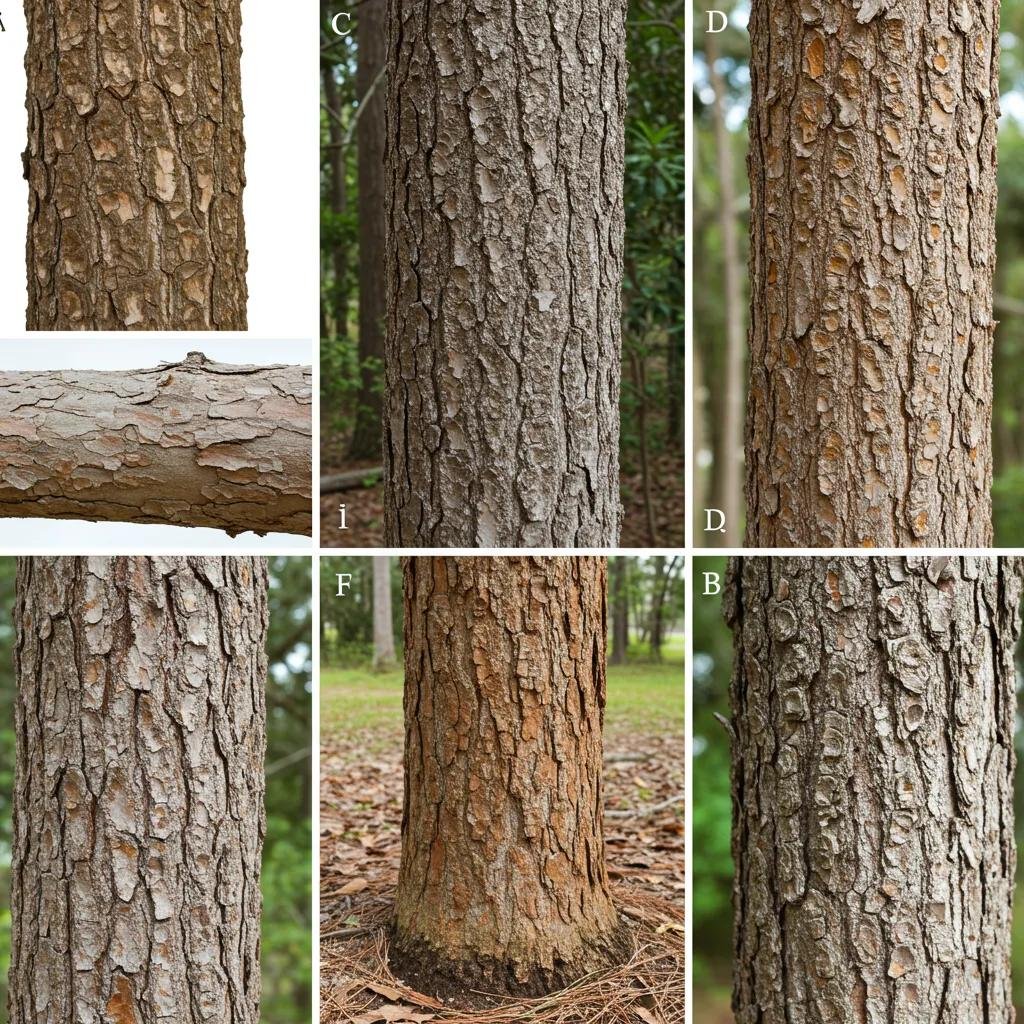
Florida tree bark shows a palette of textures from smooth, thin bark on younger saplings to deeply furrowed or scaly bark on mature pines and oaks; color ranges from pale gray in some gums to brown-black ridges in older oaks. Smooth bark often indicates younger individuals or species such as certain maples, while flaky or peeling bark is diagnostic for trees like the southern red cedar. Recording bark texture and color, including close-up photos with a scale object, helps match field observations to reference keys. Bark also reveals signs of fungal invasion (discoloration, bleeding) and sunscald, both of which affect management choices.
Observing bark over multiple seasons reveals patterns of change and helps separate natural aging from disease processes that require professional attention.
How to Identify Trees by Their Branching and Bud Patterns in Winter?
In winter or during defoliation, branching architecture and bud morphology become primary ID traits; look for opposite versus alternate branching, twig thickness, and bud shape or cluster arrangement. Opposite branching (paired branches at the same node) immediately suggests genera like dogwood or ash, while alternate branching points toward oaks and many other hardwoods. Bud shape—sharp-pointed, rounded, or clustered—offers further evidence; photographing twig ends against a neutral background captures these subtle but diagnostic features. Practicing winter checks ensures you can identify species year-round and detect structural weaknesses such as co-dominant stems or tight crotches.
Winter identification skills are especially useful for planning pruning, removing hazardous limbs, or advising contractors before major storms.
Which Florida Tree Species Have Distinctive Bark Features?
Some Florida species are instantly recognizable by bark: slash pines show flaky, plated bark on their lower trunks; live oaks often have deeply ridged, corky bark; gum trees can exhibit smooth, patchy bark with variable hues. These bark signatures help homeowners spot species at a glance and guide management choices like pruning tolerance and expected debris volume. Photograph trunk sections at breast height and note any cankers, sap flow, or fungal conks that suggest decay. Distinctive bark traits also assist in identifying invasive species that may require removal for ecosystem health.
Recognizing these species by bark supports accurate field triage, especially when leaves are scarce or when quick decisions about safety are needed.
What Role Do Flowers, Fruits, and Seeds Play in Identifying Tree Species?
Flowers, fruits, and seeds provide definitive identification cues because reproductive structures are highly species-specific in shape, color, timing, and arrangement. Bloom phenology—when a tree flowers—narrows candidate lists seasonally and can separate look-alike species that share vegetative traits. Fruits such as acorns, drupes, or cones are stable identifiers and often persist after leaves fall, offering a reliable year-round marker. Observing and documenting reproductive parts with scale and multiple angles helps match specimens to authoritative references and confirms species for management decisions.
Seasonal reproductive cues also inform wildlife value and landscape planning, as fruiting trees may attract birds or produce messy droppings that influence placement decisions.
How to Recognize Trees by Their Flowers and Blooming Seasons?
Flower traits—color, size, arrangement (clusters, spikes), and bloom season—are decisive for many species; for instance, live oaks produce small inconspicuous flowers in spring while ornamental trees may display showy blooms in specific months. Note the season of flowering, whether blooms appear before or after leaf-out, and any scent characteristics. Photograph clusters and provide contextual notes on bloom timing to help with later verification. Using a seasonal reference calendar for Florida species allows homeowners to anticipate identification opportunities and to schedule inspections during peak diagnostic periods.
Accurate flowering records enhance long-term care plans, since timing affects pruning windows and pollination interactions.
What Fruit Types Are Common Among Florida Trees?
Florida trees bear a variety of fruit types including acorns (oak species), cones (pines), drupes (mangroves, cherries), and capsules (some legumes). Each fruit form has distinct morphology: acorns with cups and nuts, cones with scales, and drupes with single seeds enclosed in fleshy tissue. Handling and photographing fruits with a labeled scale helps match specimens to species and avoids confusion with invasive look-alikes. Knowing fruit types also indicates seed dispersal strategies and potential for natural regeneration or spread of invasive species.
Fruit identification complements vegetative traits and is particularly useful when leaves are similar across species.
How Do Seeds Help Differentiate Tree Species?
Seed morphology—size, winged or nut-like form, and mass—often distinguishes closely related species and reveals dispersal ecology; for example, samaras indicate wind-dispersed maples in other regions, while heavy nuts like acorns are associated with animal dispersal. In pines, cone and seed size can differentiate Slash Pine from Longleaf Pine, while palm seeds are often large and fibrous. Collecting representative seeds and noting their attachment point (whether from fruit or cone) aids precise identification. Seed-based ID also helps predict regeneration patterns and is valuable for restoration or removal planning.
Seed traits therefore serve both taxonomic and management purposes, linking identification to ecological behavior.
Which Florida Trees Are Best Identified by Their Flowers and Fruits?
Species with distinctive reproductive parts include oaks (acorns), pines (cones), sabal palms (large fibrous fruits), and certain ornamentals with unique blossoms; these reproductive markers permit high-confidence identification when present. For homeowners, focusing on fruiting bodies simplifies ID for trees that might otherwise be confused by juvenile foliage or atypical leaf forms. Photographing fruit clusters, noting size against a ruler, and recording the timing of appearance give reliable species confirmation for landscape decisions. When fruit and flowers are not visible, combine reproductive absence with leaf and bark evidence for the best inference.
Using the reproductive checklist narrows species rapidly and guides appropriate maintenance choices such as pruning time or removal necessity.
What Are the Most Common Tree Species in Port Orange and Florida?
Local familiarity speeds identification: Port Orange and Volusia County commonly feature live oaks, laurel oaks, slash pines, longleaf pines, and sabal palms, along with a set of invasive species homeowners should recognize. These local species present predictable leaf, bark, and reproductive traits that make them practical first checks during field ID. Below is a compact EAV-style reference table for rapid comparison of the most commonly encountered local species and their quick-identifying traits.
Intro to species reference table: use this table to match a specimen to common local traits before consulting deeper species profiles.
| Species | Leaf Shape / Key Trait | Bark / Fruit |
|---|---|---|
| Live Oak (Quercus virginiana) | Evergreen, lobed, leathery leaves | Thick, ridged bark; acorns |
| Laurel Oak (Quercus laurifolia) | Oblong, shallow-lobed leaves | Smooth to shallowly fissured bark; small acorns |
| Slash Pine (Pinus elliottii) | Long needles in fascicles (2-3) | Flaky, plated bark; medium cones |
| Longleaf Pine (Pinus palustris) | Very long needles in fasicles (3) | Deeply furrowed lower trunk; large cones |
| Sabal Palm (Sabal palmetto) | Palmate fronds, fan-like | Ringed trunk; fibrous round fruit |
After identifying a species with these markers, homeowners should assess whether visible issues like heavy canopy dieback, leaning trunks, or large dead limbs warrant professional attention. If a tree shows structural hazards or advanced disease, Volusia Bobcat & Tree Service LLC provides assessments, free estimates, and 24-hour emergency response to manage urgent removal or mitigation safely.
How to Identify Florida Oak Trees: Live Oak and Laurel Oak?
Live Oak features thick, evergreen, lobed leaves with a glossy surface and large acorns in protective cups; its trunk bears deeply ridged bark on mature trees and supports wide, sprawling canopies. Laurel Oak presents narrower, oblong leaves with shallow lobes and smaller acorns; bark is smoother especially in younger individuals. Both species can suffer from oak decline and fungi that produce canopy thinning and dieback, so early detection of leaf wilt or deadwood is important. Photograph leaves, acorns, and bark and note canopy density to differentiate between these two common oaks.
Accurate distinction matters because management approaches differ: some oaks tolerate selective pruning, while others with advanced structural defects may need removal or targeted treatment.
What Are the Characteristics of Florida Pine Trees Like Slash Pine and Longleaf Pine?
Slash Pine typically bears needles in bundles of two or three that are shorter than longleaf needles and produces medium-sized, resinous cones; bark on the lower trunk is often flaky and deeply scaly. Longleaf Pine is identified by very long needles in threes, a characteristic grass stage in seedlings, and large cones; mature longleaf bark is deeply furrowed and thick. Needle length, fascicle count, and cone morphology are the most reliable field markers, especially when leaves remain green year-round. Photographs of needle clusters and cones, taken with scale, allow confident separation of these two species.
Correct identification informs wildfire management and thinning decisions because fire ecology and resilience differ between pine species.
How to Recognize Florida Palm Trees: Sabal Palm and Cabbage Palm?
Sabal Palm (commonly known as cabbage palm) produces fan-shaped palmate fronds with parallel venation and a stout, ringed trunk; its fruit are small, round, and fibrous. The frond shape, petiole structure, and trunk ring pattern distinguish palms from other monocots and aid in separating Sabal from other ornamental palms. Palms often show species-specific pest symptoms such as spear collapse or fungal fruiting bodies that signal decline. Photographs should include whole frond clusters and close-ups of the trunk and fruit.
Palm identification supports targeted treatment and helps determine whether the tree can be preserved or requires removal due to irreversible decline.
Which Invasive Tree Species Should You Know in Florida?
Several invasive tree species appear in Florida landscapes and can alter local ecology or outcompete natives; knowing their traits helps homeowners prioritize removal and restoration. Examples include certain pepper trees and invasive legumes with compound leaves and prolific fruiting, which spread rapidly by birds and wind. Identification of invasives relies on leaf, fruit, and growth habit recognition, often supported by local extension resources. Removing invasives may be advisable to protect native canopy and reduce maintenance burdens, and professional removal can ensure complete extraction of roots and stumps.
When invasives are identified on your property and crowd native trees or create hazards, consider professional removal to limit regrowth and protect landscape value.
How Can You Identify Signs of Tree Disease and Pest Infestation in Florida Trees?
Early detection of disease and pests hinges on recognizing patterns such as leaf discoloration, canopy dieback, fungal fruiting bodies, boreholes, and abnormal exudates. Symptoms point to likely causes: uniform yellowing could indicate nutrient or water stress, while patchy wilting and dieback often suggest vascular disease or root decline. Monitoring symptom clusters over time distinguishes seasonal stress from progressive disease and informs whether intervention, monitoring, or removal is needed. The table below helps homeowners triage observable symptoms, likely causes, and recommended actions ranging from monitoring to professional service.
Intro to triage table: use this symptom-action table to prioritize response and determine when to consult a professional.
| Symptom | Possible Cause | Recommended Action |
|---|---|---|
| Leaf yellowing and premature drop | Water stress, nutrient imbalance, root damage | Inspect soil/moisture; monitor; consult pro if progressive |
| Canopy dieback and thinning | Root rot, vascular disease, drought stress | Immediate assessment; consider treatment or removal |
| Fungal conks or mushrooms on trunk | Internal decay | Do not climb; call professional for safety assessment |
| Boreholes, sawdust (frass) | Wood-boring insects | Monitor extent; professional insect management advised |
| Palm spear collapse, yellowing fronds | Palm-specific fungi or nutrient deficiency | Specialist palm evaluation; possible emergency removal if structural |
This EAV triage table clarifies homeowner next steps and helps determine urgency, from continued monitoring to immediate professional evaluation.
What Are Common Symptoms of Diseased Oak and Palm Trees?
Diseased oaks typically show canopy thinning, branch dieback, epicormic sprouting, and acorn crop reduction; advanced cases reveal cankers and fungal fruiting that indicate internal decay. Palms commonly show yellowing or browning fronds, spear collapse (the newest frond dying), and fungal growth on the trunk, which are signs of lethal pathogens or severe nutrient imbalance. Early symptoms may be subtle, such as marginal leaf scorch or reduced vigor, so regular seasonal checks help detect progression. Photographing symptom progression over weeks aids diagnosis and provides useful evidence for professionals.
Timely recognition of these symptom patterns is essential because treatment windows are often narrow and delay can necessitate removal for safety.
How to Spot Tree Fungus and Other Pest Issues Early?
Fungal infections often present as fruiting bodies (conks or mushrooms) on trunks or root collars, discolored sap flow, and white rot or soft decay when wood is exposed; insects produce boreholes, sawdust, galleries, and leaf skeletonization. Regular inspections of trunk bases, limb unions, and the canopy can reveal early signs: look for exit holes, abnormal sap, or fungal growths that indicate internal decay. Use sticky traps or visual monitoring for insect activity and note any unusual animal attraction to weakened trees. Early detection allows for cultural controls, targeted pesticides, or pruning before irreversible structural decline.
Monitoring combined with good landscape hygiene reduces pest establishment and keeps minor issues from escalating into structural hazards.
When Should You Call a Professional Tree Service for Identified Problems?
Knowing when to escalate to professional help protects safety and property: call a pro if a tree leans dangerously, has large dead limbs over structures, shows extensive trunk decay, presents canopy failure, or is involved in a storm-damaged emergency. If fungal conks, progressive canopy dieback, or bore infestation affect more than 20–30% of the crown, professional evaluation is recommended because internal decay often extends beyond visible symptoms. Technical removals, large hazardous trees, and root-involved problems require specialized equipment and safety protocols. Below is a clear checklist homeowners can use to decide when to call professionals.
Use this checklist to decide on professional intervention:
- Significant lean toward a structure or pedestrian area.
- Large dead or hanging limbs over roofs or driveways.
- Visible fungal conks on trunk or root collar.
- Progressive canopy dieback affecting large branches.
- Extensive boring insect activity and sawdust accumulation.
- Tree failure after storm events requiring emergency response.
If you observe any of these conditions, seek a professional assessment promptly; many providers offer free estimates and emergency response to secure safety and scope the work.
After reading warning signs in this section, homeowners should contact Volusia Bobcat & Tree Service LLC for assessment when safety or advanced disease is present—the company advertises 24-hour emergency service, free estimates, and grapple-truck debris removal capabilities to manage urgent situations.
How Do Professional Tree Services Support Tree Health After Identification?
Professional tree services offer a suite of interventions that convert identification into measurable health outcomes: targeted pruning to remove deadwood and improve structure, removal of irreparably damaged trees to reduce risk, stump grinding to prevent pests and enable site reuse, and emergency response for storm-damaged trees. Experts evaluate structural integrity, disease progression, and site-specific hazards to recommend the least invasive, most effective action. Properly executed trimming improves air flow and light penetration, reducing disease incidence, while safe removal eliminates immediate hazards and limits pathogen spread. Below we outline service types and their benefits so homeowners can match identified problems to appropriate professional options.
Service descriptions and benefits are factual and focused on outcomes: safety, health, and aesthetics remain the guiding goals for intervention.
What Are the Benefits of Professional Tree Removal for Diseased or Hazardous Trees?
Professional removal reduces safety risks, limits liability, and prevents further property damage from falling limbs or full collapse; it also helps contain pests and diseases by removing infected material from the site. Pros use risk assessment protocols to decide whether selective removal or full extraction best protects surrounding trees and structures. While removal eliminates the immediate hazard, it also creates opportunities to replant with suitable species and improve long-term landscape resilience. Professional removal crews employ rigging and debris management to minimize collateral damage to lawns and buildings.
Evaluating removal benefits against preservation options ensures homeowners make informed choices consistent with landscape goals and safety priorities.
How Does Expert Tree Trimming Improve Tree Health and Property Safety?
Expert pruning follows species-specific timing and cutting techniques to preserve tree structure, minimize decay, and encourage healthy branching patterns; correct pruning reduces storm damage risk and improves aesthetics. Professionals prune to remove crossing or rubbing limbs, thin congested crowns to increase light penetration, and shorten long limbs that create leverage during storms. Seasonal timing matters: some species respond best to winter pruning while others tolerate selective summer cuts. Proper pruning promotes wound closure and reduces entry points for pests and pathogens, enhancing long-term health.
Regular, professionally guided trimming programs extend the life of specimen trees and reduce the likelihood of emergency interventions.
When Is Stump Grinding Necessary After Tree Removal?
Stump grinding prevents trip hazards, eliminates sites for insect and fungal colonization, and frees the area for replanting or construction; leaving a stump can encourage suckering or resprouting in some species. Grinding to below grade removes the visible hazard and reduces pest habitat, while complete root removal may be necessary for certain invasive species to prevent regrowth. Stump grinding is often faster and less disruptive than full excavation, though it may leave residual wood chips that require removal or incorporation into soil. Choosing grinding versus removal depends on future site plans and pest risk assessment.
Homeowners should consider stump management as part of the removal plan to avoid repeated treatments or landscape limitations.
How Does Volusia Bobcat & Tree Service LLC Provide Emergency Tree Services in Port Orange?
Volusia Bobcat & Tree Service LLC offers response capabilities tailored to urgent tree hazards, including 24-hour emergency service, professional removal, trimming, stump grinding, and grapple-truck debris removal through associated grapple services. Their emergency operations focus on immediate risk mitigation, clearing public access, and securing unstable trees to protect people and property. For homeowners facing storm damage, leaning trees, or large broken limbs that pose immediate danger, professional emergency crews deploy specialized equipment to manage hazards safely. Free estimates and competitive pricing are part of how homeowners can quickly evaluate options for non-emergency work after immediate risks are addressed.
This factual summary describes service options and UVPs that homeowners should weigh when urgent tree work is required.
What Tools and Apps Can Help You Identify Trees Easily?
Digital tools and field guides accelerate accurate identification by combining image recognition with authoritative species data; many apps complement hands-on checks and provide instant candidate lists that can be verified with reproductive or bark features. Using apps alongside photographic best practices and local extension resources yields the best results, especially in regions like Port Orange with both native and invasive species. The following subsections list recommended apps, explain how to combine visual guides with keys, and provide a photography checklist to capture diagnostic images.
Using digital tools correctly saves time and reduces misidentification when you must decide between monitoring, treatment, or professional action.
Which Free and Popular Tree Identification Apps Are Recommended?
Several widely used tree identification apps provide good starting points: visual ID apps can suggest species from photos, whereas field-guide apps include curated descriptions and range maps for confirmation. Popular choices include apps that excel at image recognition, others that provide community-verified IDs, and dedicated local-flora guides that reference regional species. Rely on apps for initial suggestions but verify with reproductive or bark characters for critical decisions. When an app indicates a potential disease or pest, supplement that result with a professional assessment if safety or treatment is at stake.
Apps are powerful aids but work best when paired with the four-step leaf routine and a quick bark check for robust identification.
How to Use Visual Guides and Interactive Tools for Tree Identification?
Combine dichotomous keys, image-recognition apps, and authoritative extension guides in a three-step workflow: capture standardized photos, run an app for candidate species, and confirm with guidebook descriptions focusing on leaf arrangement, venation, and reproductive structures. Cross-check results with local species lists for Port Orange to filter out unlikely matches. Maintain a simple log of images and notes to spot symptom progression or phenological timing across seasons. This layered approach reduces false positives and builds confidence for management decisions.
Using multiple tools in sequence creates redundant verification that is particularly valuable for high-risk or high-value trees.
What Are the Best Practices for Taking Photos to Identify Trees Accurately?
Good photos are essential for accurate ID: take a full-tree silhouette, close-ups of leaves (showing margin and venation), a bark/trunk detail with scale, reproductive parts if present, and a contextual shot showing habitat and size. Include a ruler or familiar object for scale and photograph from multiple angles in good lighting to capture characteristic features. Label images with date, location, and preliminary notes on symptoms or arrangement before sharing with professionals. High-quality, well-labeled images accelerate diagnosis and make initial consultations more productive.
- Full-tree silhouette: Capture overall shape and branching habit from 10–30 feet away.
- Leaf close-up: Photograph blade, margin, venation, and petiole on a neutral background.
- Bark/trunk detail: Include a ruler or coin for scale and show any conks or damage.
- Reproductive parts: Photograph flowers, fruits, or cones with scale.
- Context shot: Show proximity to structures, powerlines, and slope.
- Document symptoms: Take multiple photos over time if decline is suspected.
These six photo steps, combined with the diagnostic routines above, produce a robust dataset for both app-driven ID and professional evaluation.
This article has provided a structured, local-first approach to identifying trees across Florida attributes including leaf, bark, reproductive, and health markers. Applying the routines, using the EAV tables, and leveraging digital tools will help homeowners recognize species, triage disease or pest problems, and decide when to call professionals. When hazards or advanced disease are present, Volusia Bobcat & Tree Service LLC offers assessment, free estimates, and 24-hour emergency assistance to convert identification into safe, effective action.
Frequently Asked Questions
What are the best times of year for tree identification in Florida?
The best times for tree identification in Florida vary by species and their seasonal characteristics. Spring is ideal for observing flowers and new leaves, while summer allows for full foliage assessment. Fall can reveal fruit and seed characteristics, and winter is crucial for examining bark and branching patterns when leaves are absent. Regular seasonal checks enhance your ability to recognize trees and their health, making it easier to spot any issues that may arise throughout the year.
How can I use digital tools to enhance my tree identification skills?
Digital tools, such as tree identification apps and online databases, can significantly enhance your identification skills. These tools often use image recognition technology to suggest species based on your photos. To maximize their effectiveness, combine app suggestions with traditional field guides and local resources. Document your findings with photographs and notes, and cross-reference them with authoritative sources to confirm your identifications. This multi-faceted approach helps build confidence and accuracy in identifying trees.
What should I do if I suspect a tree is diseased or infested?
If you suspect a tree is diseased or infested, start by documenting the symptoms, such as leaf discoloration, dieback, or unusual growths. Monitor the tree over time to see if symptoms worsen. If the condition appears serious, consult a professional tree service for an assessment. They can provide expert advice on treatment options or removal if necessary. Early intervention is crucial to prevent the spread of disease or pests to other trees in your landscape.
How can I differentiate between native and invasive tree species in Florida?
Differentiating between native and invasive tree species involves understanding their characteristics and growth habits. Native species typically have adapted well to local conditions and support local wildlife, while invasive species often outcompete natives and disrupt ecosystems. Familiarize yourself with common invasive species in Florida, such as Brazilian pepper and melaleuca, by studying their leaf shapes, bark textures, and growth patterns. Local extension services and field guides can provide valuable information to help you identify and manage invasive trees effectively.
What are the signs that a tree may need professional evaluation?
Signs that a tree may require professional evaluation include significant leaning, large dead limbs, extensive canopy dieback, visible fungal growth, or boreholes indicating insect activity. If more than 20-30% of the tree’s crown shows symptoms of decline, it’s advisable to consult a professional. Additionally, if the tree poses a risk to structures or people, immediate assessment is necessary. Professionals can provide insights into the tree’s health and recommend appropriate actions, whether treatment or removal.
How can I maintain the health of my trees after identification?
Maintaining tree health after identification involves regular monitoring, proper pruning, and addressing any signs of disease or pest infestation promptly. Implement a seasonal care routine that includes checking for symptoms, ensuring adequate watering, and applying mulch to retain moisture. Pruning should be done according to species-specific guidelines to promote healthy growth and structure. Additionally, consider consulting a professional tree service for expert advice on fertilization and pest management to support long-term tree health and resilience.