Root Removal to Safeguard Your Home: Expert Tree Root Damage Prevention and Repair in Port Orange
Foundation upheaval and cracked slabs often stem from hidden underground forces. Tree roots exert pressure on building foundations by seeking out moisture and exploiting soil composition, leading to structural compromise if left unaddressed. In this guide, homeowners will discover what causes tree root damage, how to spot early warning signs, and the professional methods that protect foundations long-term. You’ll learn about safe root removal techniques, the role of physical and chemical root barriers, effective landscaping strategies, cost considerations in Port Orange, and key criteria for selecting a certified arborist from Tree Service Port Orange. By understanding these crucial aspects, you’ll gain the knowledge to protect your investment through targeted foundation root removal and preventative solutions.
What Causes Tree Roots to Damage Building Foundations?
Tree roots damage foundations when they grow into soil voids and apply mechanical pressure against concrete walls. Roots are always searching for moisture and nutrients, and their expanding network can exploit existing cracks or weak points in footings. For instance, surface roots can lift sidewalk slabs as they thicken, clearly demonstrating how continuous radial growth generates enough force to fracture engineered structures. Understanding this interaction between a tree’s root system and a building’s foundation underscores the importance of targeted root removal to protect foundations and maintain structural integrity.
Roots serve as structural anchors and nutrient conduits for trees, extending outward in their constant search for water. When roots encounter compacted soil around foundations, their growth naturally redirects along the path of least resistance—often between the soil and the concrete interface. As moisture gradients draw roots toward footings, the pressure they exert can widen tiny fissures into visible cracks. Recognizing this fundamental mechanism sets the stage for a deeper exploration of how roots expand near foundations.
How Do Tree Roots Grow and Spread Near Foundations?
Tree roots grow through cell division at the root apical meristem and expand laterally as secondary thickening occurs. This meristem-driven elongation allows delicate feeder roots to navigate soil pores, while more robust structural roots radiate outward to stabilize the tree. When in proximity to foundations, roots frequently orient themselves along moisture gradients and exploit microgaps between the soil and concrete. An oak tree’s lateral roots can extend two to three times the radius of its canopy, illustrating how quickly a basement footing can become encroached upon.
As roots thicken, they follow hyponastic curves that press against rigid surfaces. When a root tip detects moisture seeping from foundation leaks or condensation, it shifts its direction—a phenomenon known as hydrotropism. This tendency to track water seeps causes roots to cluster near footings, significantly escalating the risk of subsurface upheaval. Understanding these growth patterns naturally leads into how local soil conditions influence root behavior.
An Examination of Tree Root Damage to Buildings
The issues surrounding tree root damage to buildings encompass… The damage may simply arise as a consequence of tree roots…Tree root damage to buildings, Unknown Author, 2001
What Soil Types in Port Orange Increase Foundation Damage Risks?
Port Orange’s coastal plain soils vary from well-draining sands to expansive clay layers, each impacting root expansion in distinct ways. Sandy soils offer minimal resistance, allowing roots to extend rapidly but with less mechanical pressure. Conversely, clay soils swell when wet and shrink when dry, creating alternating voids and pressurized zones that roots readily exploit. Expansive clay can expand by as much as 30% when saturated, effectively driving roots into foundation joints.
The Influence of Tree Roots on Soil-Structure Interaction in Expansive Clay Soils
Tree root influence on soil-structure interaction in expansive clay soilsTree root influence on soil-structure interaction in expansive clay soils, Unknown Author, 2001
Clay’s high plasticity can also trap moisture around footings, sustaining hydrotropic stimulation and encouraging persistent root intrusion. In contrast, sandy loam found around older buildings drains quickly, reducing root thickness but increasing root length as trees actively search for moisture. Recognizing these soil attributes is crucial for both diagnosing existing damage and designing effective root barriers suited to local geotechnical conditions.
How Does Moisture Affect Tree Root Growth and Foundation Stability?
Moisture gradients within the soil trigger hydrotropic responses that guide roots toward damp zones adjacent to foundations. When a foundation leak or a high seasonal water table creates a persistently wet area, feeder roots proliferate to capitalize on this reliable moisture source. This constant influx of fine roots increases the radial swelling pressure against foundation walls and slabs. For example, a leaking downpipe can foster dense root mats beneath a footer, leading to the lifting of interior floors over several months.
Excess moisture also softens the soil, reducing its bearing capacity and transferring more load directly to the foundation itself. As roots invade this softened soil, their thickening further destabilizes the surrounding earth, compounding settlement issues. Addressing moisture sources—through improved drainage and leak repairs—prepares the ground for effective root removal and barrier installation, ultimately protecting foundations long-term.
What Are the Common Signs of Tree Root Damage to Foundations?
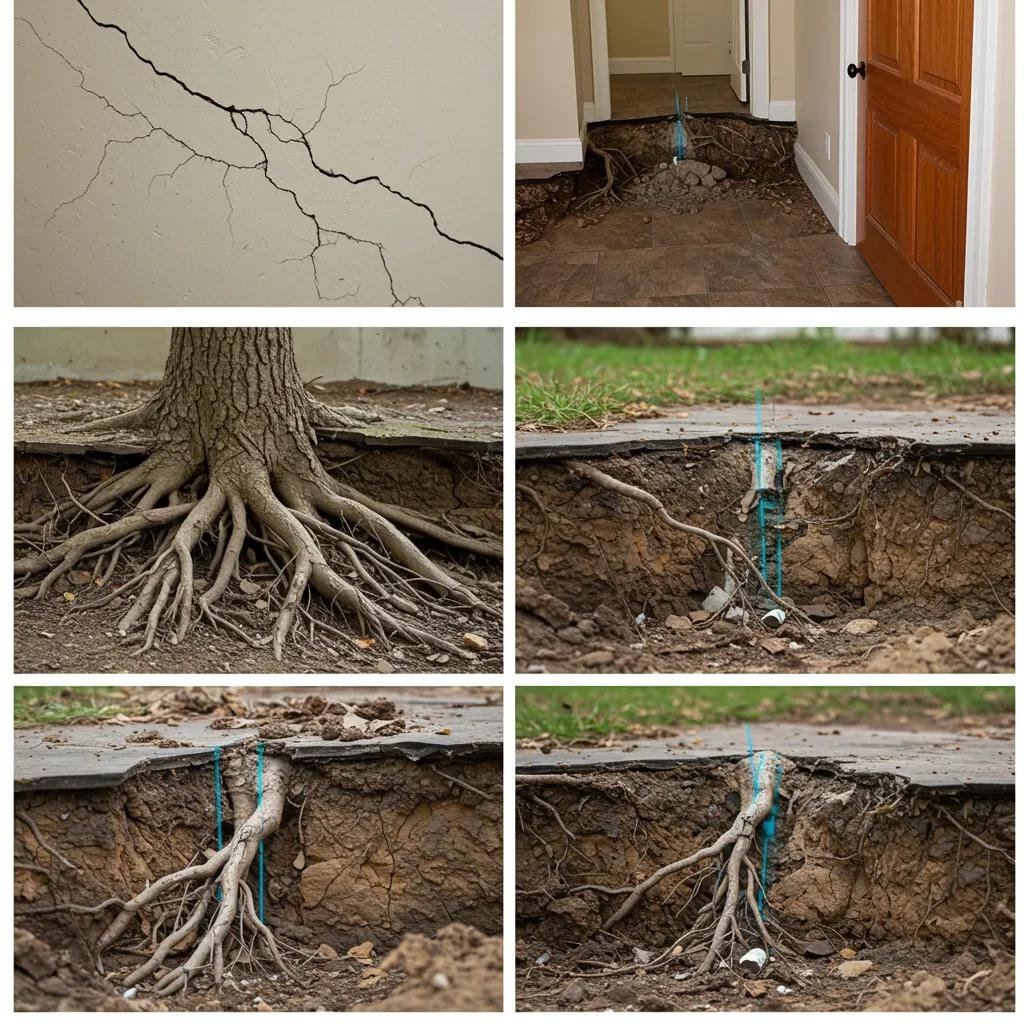
Visible and structural symptoms clearly indicate when tree roots are undermining building foundations. Early indicators often include hairline cracks in basement walls, slight floor unevenness, and misaligned door frames. As the damage progresses, you might notice bulging concrete, horizontal cracking marked by root impressions, and gaps forming at wall-to-floor joints. Detecting these issues early allows for timely intervention, significantly minimizing repair costs and preserving your property’s value.
Following the appearance of initial cracks, secondary signs such as shifting tiles, sloping patios, and pooling water against foundation walls frequently emerge. Each symptom underscores the critical need for professional assessment and targeted root removal to halt further foundation damage. Recognizing these clues lays the essential groundwork for understanding specific crack patterns and drainage issues directly linked to root intrusion.
Which Foundation Cracks and Structural Issues Indicate Root Damage?
When roots press against concrete, they leave behind telltale crack patterns:
- Fine vertical fissures often signal early intrusion where feeder roots exploit minor shrinkage joints.
- Horizontal cracks near the basement floor indicate significant lateral pressure from thick structural roots.
- Stair-step cracks in blockwork reveal shearing forces as roots expand between masonry courses.
These structural issues clearly demonstrate the mechanical relationship between growing roots and foundation materials. Identifying the orientation, width, and location of cracks helps distinguish root-driven damage from issues like settlement or thermal movement.
Recognizing these specific crack patterns informs the selection of appropriate removal methods and barrier strategies that target root paths without causing unnecessary excavation near unaffected areas.
How Can Plumbing and Drainage Problems Signal Root Intrusion?
Moisture-seeking roots frequently invade leaking drain lines and saturated soil around downpipes. Signs of root intrusion in plumbing include slow drains, recurring blockages, and cracks in sewer pipes that become visible during camera inspections. Tree roots exploit even the smallest hairline fractures, lodging fibrous root masses that obstruct flow and widen broken sections over time. Secondary symptoms, such as water pooling in landscape beds or damp spots on foundation walls, often accompany plumbing issues.
When drainage systems repeatedly fail, root removal and pipe repair should be addressed simultaneously. Repairing leaks and improving surface runoff redirects moisture away from foundations, effectively preventing roots from re-establishing in vulnerable zones.
When Should Property Owners Seek Professional Assessment?
Property owners should schedule an arborist evaluation at the very first sign of cracking or drainage failure. Seasonal inspections—particularly after the wet Florida summers—are crucial for detecting early root encroachment before major upheaval occurs. Engaging a certified arborist within 30 days of spotting cracks or plumbing blockages ensures timely diagnosis and helps reduce repair budgets. Prompt assessment identifies the specific root species involved, their growth patterns, and the soil moisture profiles, guiding tailored root removal to effectively protect foundations.
Early intervention also allows for the simultaneous installation of root barriers and drainage upgrades, delivering a comprehensive solution that sustains structural stability for decades to come.
How Do Professional Tree Root Removal Services Protect Foundations?
Professional root removal services combine expert arboricultural knowledge with precise excavation techniques to extract problematic roots while carefully preserving tree health. Technicians utilize specialized tools—such as curved pruning saws, air spades, and micro-excavators—to sever and lift roots without destabilizing surrounding soil. This safe removal method effectively reduces lateral pressure on foundations and prevents regrowth through severed root collars. A precise removal strategy ensures that deep roots are eliminated, not just surface feeders.
Certified arborists from Tree Service Port Orange integrate soil analysis and structural engineering insights to determine the correct removal depth and prune roots at the optimal point. Removing compromised roots halts further mechanical damage, while root collars are treated to discourage regrowth. Coordinating root removal with foundation repairs and barrier installation provides a seamless defense against future intrusion.
What Are the Safe Methods for Tree Root Removal and Pruning?
- Precision root pruning using bypass saws to cut roots cleanly at the recommended distance from the trunk.
- Air-spade excavation to gently remove surrounding soil, revealing thicker roots for careful extraction.
- Controlled micro-excavation to remove large structural roots without undermining adjacent foundations.
Each method prioritizes the tree’s health while minimizing soil disturbance. Following removal, root stumps are treated with a selective herbicide to prevent resprouting without harming the main trunk. These safe techniques support both foundation protection and tree preservation.
How Does Root Removal Prevent Further Foundation Damage?
Extracting roots significantly reduces mechanical stress on foundation walls and footings by eliminating the expanding force within soil voids. Once roots are removed at the specified cutting line, pressure against the concrete dissipates, and underlying cracks can be repaired with epoxy injections or hydraulic cement. Removing the source of pressure prevents cracks from reopening and helps align foundation slabs back into their original position. Coordinated root removal and foundation repair thus restore structural integrity and prevent the recurrence of damage.
Root removal also effectively interrupts the hydrotropic cycle: without a moisture-seeking root network near the footing, new roots are far less likely to regrow in that specific area. This interruption enhances long-term stability, especially when combined with appropriate barrier solutions.
Why Is Hiring a Certified Arborist Important for Root Removal?
A certified arborist brings accredited expertise in tree biology, soil interactions, and safe removal practices. Certification from the International Society of Arboriculture (ISA) ensures adherence to industry standards and comprehensive insurance coverage for excavation work. Arborists can accurately diagnose tree health, determine which roots are critical for structural stability, and apply pruning techniques that avoid unnecessary stress. Working with a certified specialist from Tree Service Port Orange guarantees removal accuracy, mitigates liability risks, and preserves tree vitality.
Certified arborists also coordinate effectively with structural engineers to align root removal plans with foundation repair designs, fostering collaboration that optimizes both tree preservation and structural protection.
What Are Foundation Root Barriers and How Do They Prevent Damage?
Foundation root barriers are engineered solutions specifically designed to redirect or inhibit root growth away from vulnerable structures. These barriers function as physical blocks or chemical deterrents installed vertically in the soil alongside foundations. By preventing roots from crossing the barrier plane, they effectively protect basement walls, slabs, and utility lines from mechanical pressure. Proper barrier placement within the active root growth zone creates a lasting defense that complements root removal and moisture management strategies.
After root extraction, barrier installation ensures that new roots developing deeper in the soil are guided downward rather than laterally into foundation zones. This two-pronged approach combines immediate relief from existing pressure with proactive prevention of future intrusion.
What Types of Root Barriers Are Available: Physical vs Chemical?
Below is a comparison of physical and chemical root barrier options:
| Barrier Type | Characteristic | Functional Advantage |
|---|---|---|
| High-Density Polyethylene (HDPE) | Rigid, impermeable sheet | Redirects roots downward without degradation |
| Geotextile Fabric | Flexible, breathable layer | Balances water flow while blocking roots |
| Chemical Barrier | Root-inhibiting compound | Provides gradual root growth suppression |
How Is a Root Barrier Installed to Protect Foundations?
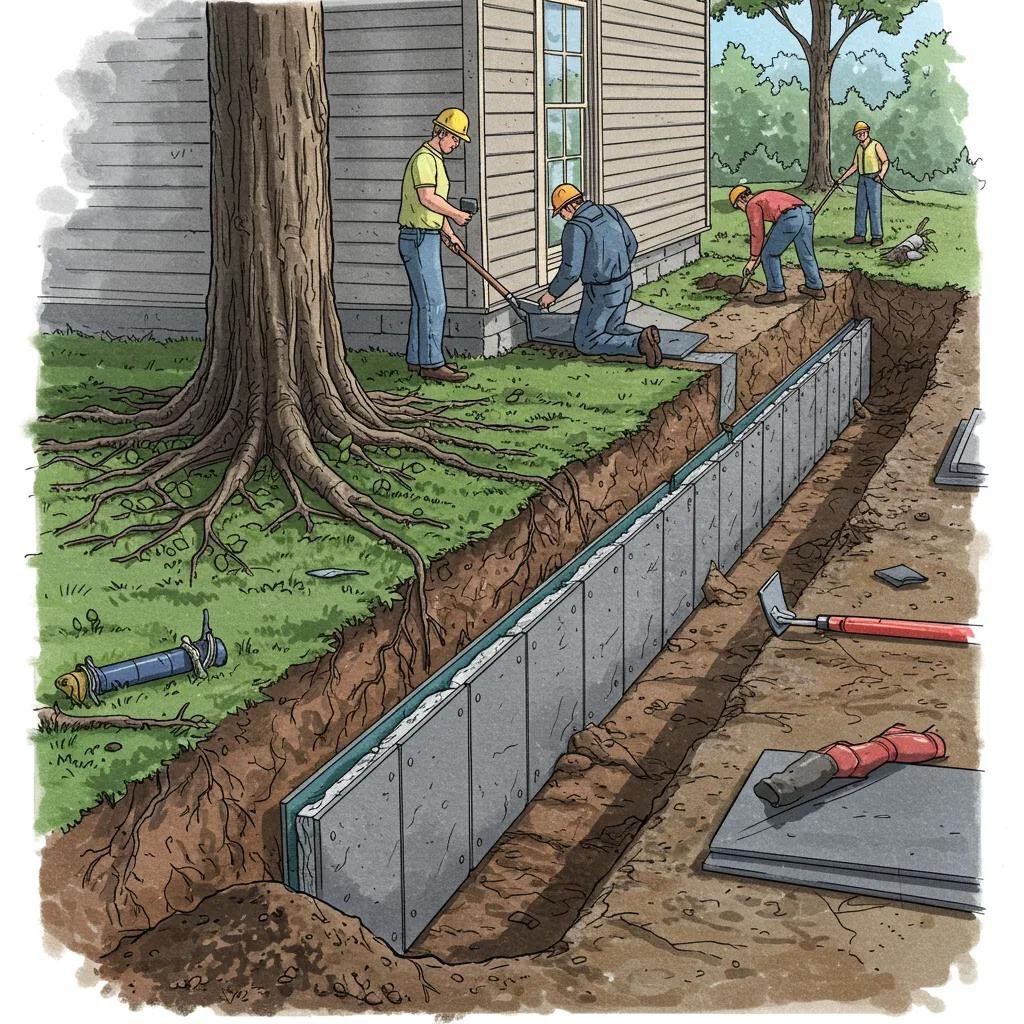
- Trench excavation parallel to the foundation at the specified depth.
- Placement of barrier panels or fabric flush against the footing.
- Sealing seams and overlaps with watertight edging materials.
- Backfilling with native soil and compacting to restore grade.
Proper trench depth—typically 18 to 24 inches for most tree species—ensures barriers effectively intersect active root zones. After installation, turf or landscape mulch can be replaced to maintain aesthetics. Correct placement and sealing guarantee that roots cannot bypass the barrier by growing underneath or around the edges.
What Are the Benefits and Limitations of HDPE and Geotextile Root Barriers?
| Material | Key Benefit | Notable Limitation |
|---|---|---|
| HDPE | Durable, long-lasting physical block | Rigid panels can be difficult to install in confined spaces |
| Geotextile Fabric | Allows water infiltration while blocking roots | May degrade over extended periods or under high compost activity |
How Can Property Owners Prevent Tree Root Damage Long-Term?
Long-term prevention involves a combination of strategic tree selection, proper planting distances, and effective drainage management. Choosing tree species with non-invasive root habits significantly reduces the likelihood of future intrusion. Maintaining a barrier-free zone around foundations by consistently directing water runoff away and keeping soil moisture balanced further limits root attraction. Integrating these measures with periodic root inspections by a certified arborist ensures ongoing protection without compromising landscape aesthetics.
This holistic approach aligns tree care with structural preservation, delivering lasting foundation stability and invaluable peace of mind.
Which Tree Species Have Non-Invasive Roots Suitable Near Foundations?
- Crabapple (Malus spp.) features shallow, fibrous roots that tend to stay within the dripline.
- Japanese Maple (Acer palmatum) develops a fine root network with limited lateral spread.
- Dogwood (Cornus florida) forms a compact root ball with minimal foundation pressure.
What Is the Recommended Planting Distance from Foundations?
Trees should be planted a minimum of 10 to 15 feet away from foundations to prevent root-wall interaction. This distance allows the majority of the root mass to develop outside the influence zone of footings, thereby reducing mechanical stress. For larger species with extensive canopies—such as oaks and live oaks—a planting setback of 20 to 25 feet is strongly advisable. Adhering to these guidelines effectively balances landscape design preferences with essential structural protection.
How Does Proper Drainage and Soil Management Reduce Root Damage Risks?
Effective drainage and soil health management actively discourage roots from seeking moisture at foundations. Installing French drains or extending downpipe outlets ensures surface water is directed at least 5 feet away from footings. Maintaining consistent soil moisture through mulch layers and organic amendments prevents the cyclic swelling and shrinkage of clay soils. These practices stabilize soil structure, reducing voids that attract hydrotropic root growth and protecting foundations from damaging pressure cycles.
What Is the Cost of Tree Root Removal and Foundation Protection Services?
Investing in root removal and foundation protection offers significant value by averting costly structural repairs. In Port Orange, baseline tree root removal services typically begin around $350 for small root systems near shallow slab areas. Comprehensive projects—including deep root extraction, barrier installation, and industrial-grade trenching—can range from $1,200 to $4,500. This variation reflects differences in root complexity, soil conditions, and the extent of protective measures required.
Understanding these cost factors helps property owners budget effectively for both immediate removal and long-term defense strategies.
What Factors Influence Tree Root Removal Costs in Port Orange?
- Root Volume and Diameter – Larger roots necessitate more labor and specialized equipment.
- Soil Composition – Clay soils increase excavation difficulty compared to sandy profiles.
- Access Constraints – Tight spaces or existing hardscaping installations raise removal complexity.
- Tree Species – Hardwood roots often demand more effort than softwood species.
Evaluating these factors during an initial arborist consultation clarifies the project scope and ensures accurate quoting.
How Does Root Barrier Installation Affect Overall Foundation Protection Expenses?
Installing root barriers typically adds 25–40% to total project costs but provides enduring defense against future intrusion. Physical barrier materials and the associated trenching account for most of this investment. However, by preventing recurring root extraction and foundation repair, barriers offer a strong return on investment over their 10- to 15-year lifespan. Property owners can plan budgets that prioritize upfront barrier installation to significantly reduce long-term maintenance expenses.
Are There Financing or Maintenance Plans Available for Root Damage Prevention?
Tree Service Port Orange offers flexible financing options and annual maintenance plans that combine root inspections, barrier assessments, and targeted pruning. These programs effectively distribute costs over time while ensuring proactive monitoring. Subscription plans include biannual site visits and emergency root monitoring triggered by heavy rainfall or plumbing leaks. Such ongoing oversight preserves foundation integrity and spreads investment across manageable installments.
What Should You Look for When Choosing a Tree Root Removal Service in Port Orange?
Selecting the right service provider hinges on credentials, local experience, and customer satisfaction. Look for ISA certification, comprehensive liability insurance, and transparent pricing. A provider’s familiarity with Port Orange soil and seasonal moisture patterns enables tailored solutions that outperform generic approaches. Reading verified testimonials reveals track records in root damage repair and barrier installation. Choosing a locally rooted expert from Tree Service Port Orange ensures specialist care and reliable results.
How Do Certifications and Insurance Impact Service Quality?
Certifications from the International Society of Arboriculture demonstrate adherence to best practices in tree care and ethical pruning standards. Fully licensed and insured contractors protect property owners from liability in case of accidental damage during excavation or root removal. Verifiable credentials and policy limits exceeding $1 million provide confidence that the service meets professional benchmarks. This level of protection reflects the provider’s commitment to quality and safety.
Why Are Local Experts Better for Foundation Root Damage Solutions?
Local arborists possess an intimate understanding of Port Orange’s unique soil conditions, seasonal rainfall patterns, and prevalent tree species. This regional expertise translates into accurate diagnoses and tailored removal plans that consider the expansion tendencies of local clay soils. Local teams also respond more rapidly to emergency root intrusions following storm events or plumbing failures. Partnering with a service rooted in the community ensures more timely interventions and lasting foundation protection.
What Do Customer Testimonials Reveal About Service Reliability?
Verified customer feedback highlights consistent on-time arrival, clear project communication, and thorough clean-up after root removal and barrier work. Testimonials often mention fewer recurring foundation issues and improved landscape health following professional interventions. Positive reviews confirm trust in expertise and long-term satisfaction, reinforcing the provider’s reputation for reliable foundation protection solutions.
At Tree Service Port Orange, our certified arborists combine regional knowledge, advanced removal methods, and robust barrier installations to safeguard your foundations and preserve your property value.
Foundations remain stable when moisture is managed effectively, roots are removed safely, and proactive barriers are in place. Partner with local experts to prevent costly repairs and maintain structural integrity year after year.
Mitigating the Impact of Human Activities on Urban Tree Root Systems and Infrastructure
The root systems of almost all trees in built environments are subject to the impacts of human activities, which can affect tree health and reduce longevity. These influences are present from the early stages of nursery development and throughout the tree’s life. Reduced root systems, due to root loss or constriction, can decrease stability and increase stress. Natural infection of urban tree roots following severing has not been shown to lead to extensive decay development. Roots frequently conflict with infrastructure in urban areas due to proximity. Strategies for providing root space beneath pavements and for reducing pavement heaving have been developed, but strategies for preventing damage to foundations and sewer pipes are limited to increasing separation distances or improving construction methods.The management of tree root systems in urban and suburban settings II: A review of strategies to mitigate human impacts, Unknown Author, 2014