Modernize Tree Care with Advanced Tech for Safer, Efficient Service
Tree care technology encompasses the tools, sensors, data platforms, and mechanized equipment arborists use to assess, maintain, and remove trees more safely and sustainably. These advancements replace risky manual tasks with remote assessments, precision tools, and data-driven decisions, leading to faster projects, fewer surprises, and a lighter environmental footprint for property owners. You’ll discover how drones, LiDAR, AI diagnostics, grapple trucks, automated stump grinders, and sensor networks are transforming arboriculture, delivering tangible benefits for homeowners and commercial properties alike. Many property owners grapple with ongoing maintenance costs, the threat of storm damage, and uncertainty about tree health. This article outlines practical technological solutions designed to mitigate these risks and optimize long-term tree care outcomes. We’ll delve into the key advantages of modern equipment, drone inspection services, cutting-edge removal techniques, AI and sensor monitoring, sustainable innovations, automated stump grinding, and how technology supports 24/7 emergency tree services right here in Port Orange and Volusia County. Throughout, we’ll integrate local service options and real-world examples to connect technological choices with on-the-ground results.
What Are the Key Benefits of Modern Tree Care Equipment?
Modern tree care equipment offers three interconnected advantages: enhanced safety by keeping crews out of harm’s way, increased efficiency through mechanization and optimized workflows, and improved precision to protect landscape assets and tree vitality. These mechanisms—remote assessment, mechanized cutting and hauling, and data-informed decisions—translate into fewer service hours, cleaner pruning results, and reduced collateral damage to your property. Understanding these benefits empowers property owners to compare service providers and opt for technology-driven approaches that deliver lasting value over simply the lowest upfront cost. The following sections will break down safety, efficiency, precision, cost savings, and environmental impact, illustrating the direct cause-and-effect relationships between specific tools and homeowner benefits.
How Does Advanced Equipment Enhance Safety in Tree Work?
Advanced equipment significantly boosts safety by enabling remote assessments and controlled interventions, minimizing the need for climbers in precarious positions and reducing exposure to potential drop zones. Drones and LiDAR can survey tall or compromised trees before any crew member approaches, while cranes and grapple saws facilitate sectional removal, preventing uncontrolled falls and lowering the risk of property damage and worker injury. Modern operator cabins, remote-cutting systems, and stability sensors are additional mechanical safeguards that reduce human error and minimize on-site risks. These safety enhancements provide homeowners with greater peace of mind and fewer liability concerns, making technology a wise investment in both prevention and controlled remediation.
In What Ways Does Technology Increase Efficiency in Tree Removal and Maintenance?
Technology streamlines tree removal and maintenance by condensing assessment, planning, and execution into efficient workflows that save labor hours and reduce on-site time. GPS routing and scheduling software allow crews to optimize multi-property jobs, while grapple trucks and mechanized chippers accelerate debris removal and turnover, often completing tasks in a fraction of the time required by manual methods. Automated stump grinders and precision pruning tools shorten restoration periods, allowing for quicker replanting or turf repair. These faster project timelines not only reduce direct labor costs but also minimize disruption to homeowners’ schedules and decrease extended equipment rental or staging expenses.
How Do Modern Tools Improve Precision in Tree Trimming and Stump Grinding?
Modern tools enhance precision through controlled cutting heads, adjustable torque saws, and calibrated grinders that target only the necessary material for removal. Powered pruning saws with depth control and pole-mounted precision cutters create cleaner cuts that promote healthy regrowth and limit decay pathways. Today’s stump grinders remove more root mass with minimal excavation, resulting in a flatter site and less soil disturbance for quicker landscape restoration. This level of precision leads to superior aesthetic outcomes, reduced regrowth, and a lower risk of disease entry following pruning or removal.
What Cost Savings Can Property Owners Expect from Using Advanced Tree Care Technology?
Property owners can anticipate both direct and indirect cost savings when contractors utilize modern technology. Shorter job durations mean lower billed hours, fewer accidental damages reduce repair expenses, and early diagnostics can prevent costly emergency removals. Remote inspections and AI-assisted triage prioritize high-risk trees, ensuring resources are focused only on critical issues and avoiding unnecessary treatments. Over time, precise pruning and targeted pest control extend tree lifespans, reducing replacement costs and shifting spending from frequent reactive work to more budget-friendly planned maintenance.
How Do Sustainable Innovations Reduce Environmental Impact in Tree Care?
Sustainable innovations minimize environmental impact through targeted, low-chemical interventions, reduced fuel consumption, and preservation of soil structure at work sites. Precision application tools and biocontrol methods limit pesticide dispersal to non-target species, while electric or fuel-efficient equipment cuts emissions during routine maintenance. Sensor-driven irrigation and nutrient scheduling optimize water and fertilizer use, aligning treatments with actual plant needs rather than fixed schedules. These strategies protect local ecosystems and help property owners meet community environmental expectations.
| Technology | Primary Benefit | Customer Value |
|---|---|---|
| Drone inspection | Rapid aerial assessment | Faster, safer diagnoses without climbers |
| Grapple truck | Combined cut-and-haul | Reduced job time and debris on-site |
| Stump grinder | Deep root removal | Quicker landscape restoration and no regrowth |
| LiDAR mapping | 3D canopy structure | Accurate volume estimates and risk modeling |
This comparison clarifies how specific tools translate into homeowner benefits and helps in selecting the right approach for any property. Understanding these connections naturally leads to how drones, in particular, are reshaping tree health assessments.
After detailing these customer-focused benefits, homeowners seeking technology-enhanced tree removal, trimming, and stump grinding services should look for local providers who reliably deploy this advanced equipment. Volusia Bobcat & Tree Service LLC offers comprehensive tree removal, tree trimming, stump grinding, 24/7 emergency services, and debris hauling through Volusia Grapple Service. They combine safety-focused equipment with deep local knowledge for customers in Port Orange and Volusia County. (florida-tree-service.com) The firm’s integrated services help property owners leverage equipment advantages—safety, speed, precision—for tangible results on their properties.
How Are Drone Tree Inspection Services Revolutionizing Tree Health Assessments?
Drone tree inspections integrate high-resolution imaging, GPS-stabilized flight, and advanced sensors to deliver rapid, comprehensive assessments that would otherwise demand climbers or scaffolding. The process is straightforward: drones capture aerial RGB, thermal, or LiDAR data; specialized software stitches and analyzes the imagery; and arborists interpret the findings to recommend targeted treatments, removals, or ongoing monitoring. This workflow accelerates diagnosis, reduces the risks associated with climbing, and creates archival records for future comparisons. The following sections will detail the specific drone technologies used, how they identify diseases and hazards, and why drone surveys surpass traditional inspections in speed, safety, and documentation.
What Technologies Do Drones Use for Safer and More Accurate Tree Inspections?
Drones utilized in arboriculture typically feature high-resolution RGB cameras, thermal imagers, and, on more advanced platforms, LiDAR scanners and RTK GPS modules for centimeter-level accuracy in geolocation. RGB imagery is essential for structural assessments and documenting visible symptoms. Thermal imaging detects moisture anomalies and decay pockets invisible to the naked eye, while LiDAR generates detailed 3D canopy models that quantify crown volume and potential failure points. Post-flight processing software stitches images together, runs change-detection algorithms, and exports georeferenced maps for arborists to prioritize interventions. This combination of sensors enables safer, data-rich inspections without unnecessary exposure for climbing crews.
Research has explored the comparative effectiveness of LiDAR and imagery for creating 3D models of trees.
Drone-Based LiDAR vs. Imagery for 3D Tree Modeling
The purpose of this study is to assess
COMPARISON ASSESSMENT OF DIGITAL 3D MODELS OBTAINED BY DRONE-BASED LIDAR AND DRONE IMAGERY
Comparison assessment of digital 3d models obtained by drone-based lidar and drone imagery, M Bouziani, 2021
How Do Drone Inspections Identify Tree Diseases and Hazards Early?
Drone inspections excel at early identification of diseases and hazards by revealing visual and spectral indicators of stress—such as thinning crowns, discoloration, dieback, and thermal anomalies—before these issues become critical. Multispectral and thermal data can detect subtle changes in canopy moisture and pigment that often precede visible decline, allowing arborists to recommend treatments that halt progression. When paired with historical imagery, drone surveys track trends over time, enabling service providers to demonstrate whether a tree’s condition is stable, improving, or deteriorating. Early detection significantly reduces the likelihood of sudden tree failures and often saves trees that might otherwise be unnecessarily removed.
What Are the Advantages of Drone Surveys Over Traditional Tree Inspection Methods?
Drone surveys offer distinct advantages over traditional methods: they drastically cut inspection time for large properties, eliminate climber exposure during initial assessments, and create precise, easily shareable records that support treatment planning and insurance claims. While climber-based inspections remain vital for hands-on evaluation, drones effectively triage which trees require closer attention and which can be managed on routine cycles. The data-driven records also enhance accountability and transparency for homeowners and property managers seeking documented condition histories and clear, actionable recommendations.
Below is a quick reference mapping drone features to inspection outcomes.
| Drone Feature | Attribute | Use Case |
|---|---|---|
| High-res RGB camera | Visual detail | Structural assessment and photo deliverables |
| Thermal imaging | Temperature anomalies | Detect internal decay and moisture issues |
| LiDAR scanner | 3D point cloud | Canopy volume, clearance planning, and risk modeling |
This table illustrates which sensor choices yield specific inspection outcomes, helping property owners understand the deliverables of an inspection and how they support maintenance planning. For Port Orange residents interested in drone-based documentation, it’s advisable to inquire about report formats and imagery deliverables to ensure inspections meet insurance and municipal requirements.
When homeowners seek a local, drone-supported tree health assessment, Volusia Bobcat & Tree Service LLC provides drone tree inspections and tree health assessment services throughout Port Orange and Volusia County. (florida-tree-service.com) Customers receive detailed photos and condition reports that clarify risks and recommended next steps, enabling informed decisions without unnecessary climber deployments.
What Advanced Tree Removal Techniques Are Used for Safer and More Efficient Service?
Advanced removal techniques employ controlled mechanical systems—such as crane-assisted sectional dismantling, grapple saws, and mechanized rigs—to safely lower sections, manage debris efficiently, and protect surrounding property. The core principle involves sectional removal supported by lifting gear, which prevents uncontrolled falls and distributes load to minimize stress on adjacent structures. These methods shorten job durations and reduce the number of personnel needed on-site, thereby lowering exposure to hazards. The following sections will detail the benefits of cranes and grapple saws, built-in safety features, and the role of automation in reducing labor and risk.
How Do Crane-Assisted and Grapple Saw Technologies Improve Tree Removal?
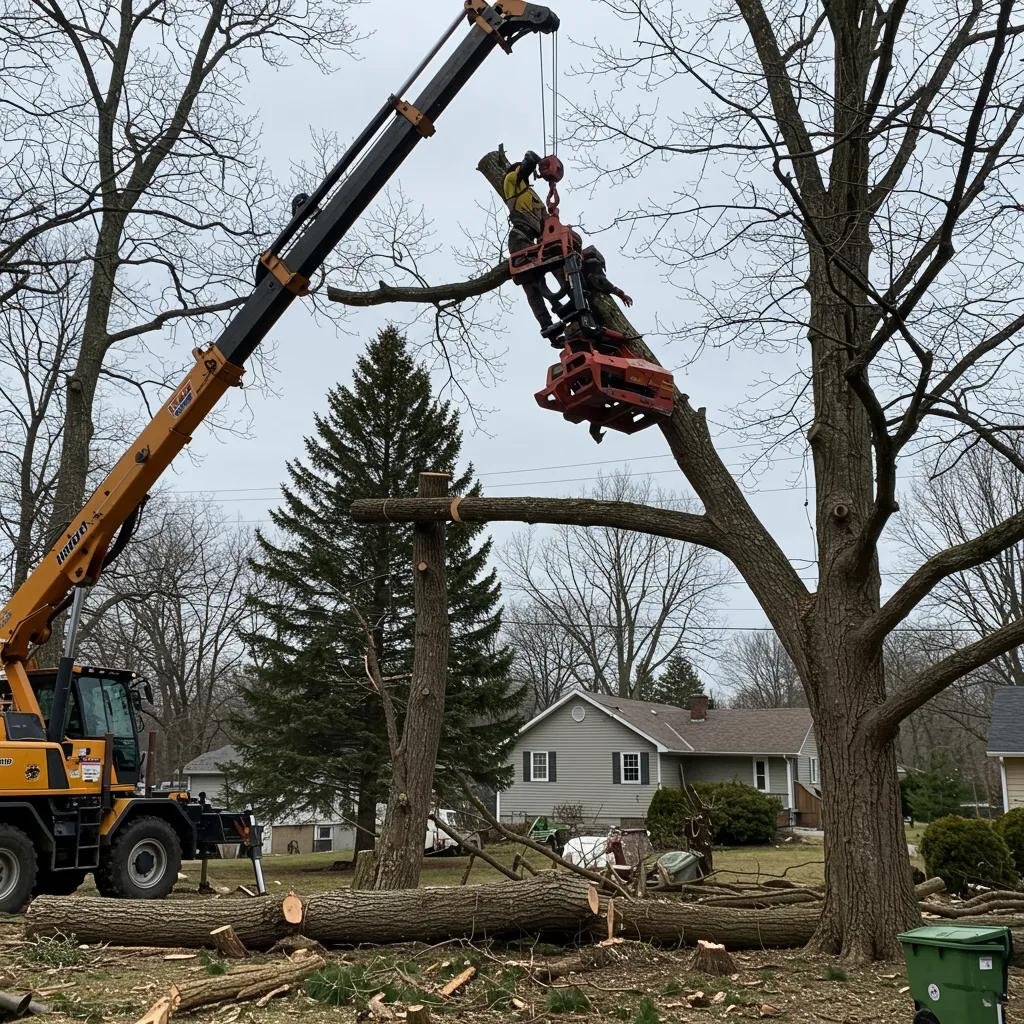
Crane-assisted removal and grapple saw technologies enhance tree removal by enabling controlled lifts and combined cutting-and-haul workflows, ideal for large or hazardous trees in confined spaces. Cranes allow for the sectional lowering of heavy limbs near buildings or utilities, while grapple saws cut and secure material for immediate loading into trucks, eliminating double-handling. These techniques protect landscapes by avoiding large horizontal swings and make removals possible that would be unsafe or impossible with conventional climbing alone. For storm cleanup and complex removals, combining cranes with grapple trucks significantly speeds up recovery and minimizes property impact.
The efficiency and versatility of grapple saws in processing trees have been a subject of study in forestry operations.
Grapple Saw Technology for Efficient Tree Processing
1. A grapple-saw is a low-cost implement, consisting of a hydraulic chainsaw mounted on the frame of a standard log grapple. Grapple-saws are generally installed on forwarders, loaders or modified excavators and are used for crosscutting whole trees or delimbed stems, often as part of a more complex work task such as pre-bunching, loading or stacking. The study analyzed eight different commercial operations where trees were processed with grapple-saws, instead of dedicated cut-to-length processors. All machines in the study were mounted on excavators, but were used under a wide range of stand types and work conditions, although most of the study stands were managed as coppice. Work productivity was determined with time study techniques, which covered the processing of 1800 trees for a total time of 73 h. Productivity ranged between 0.8 and 13 dry t per productive machine hour or between 0.7 and 11 dry t per scheduled machine hour, depending on whether delays (i.e., interruptions of productive work) were excluded or included, respectively. Regression analysis allowed modeling productivity as a function of significant variables, such as tree size, machine type and processing quality. In particular, processing quality was defined as “coarse” when conducted according to lax size and form specifications, or “high-quality” when size and form specifications were strict. The productivity of coarse processing rapidly increased with tree size until the optimum value of 0.3 dry t per tree, and then it slowly declined. The same trend was found for high-quality processing, but in this case optimum tree size was 0.6 dry t per tree. Productivity was higher for landing site work, cold deck operations and coarse processing into tree sections. A dedicated cut-to-length processor is a better choice for matching tight log product specifications, while the grapple-saw is best for handling firewood and chip wood. A grapple-saw is a low-investment piece of equipment for mechanizing small-
A low-investment technology for the simplified processing of energy wood from coppice forests, R Spinelli, 2019
What Safety Features Are Built Into Modern Tree Removal Machinery?
Modern removal machinery incorporates stability sensors, load-monitoring systems, remote shut-offs, and operator-protection cabins to minimize the risk of catastrophic failure. Stabilizers and electronic load monitoring prevent tipping, while remote-control options allow operators to maintain a safe distance from drop zones during high-risk cuts. Regular calibration, comprehensive operator training, and adherence to documented safety protocols are also critical components that contractors must follow to fully leverage the protective benefits of the equipment. These layered safety features collectively form a system designed to mitigate human error and ensure predictable, repeatable outcomes.
How Does Automation Reduce Labor and Risk in Hazardous Tree Removal?
Automation reduces labor requirements and inherent risks by substituting mechanized attachments—such as remote-operated saws and semi-autonomous grapple systems—for manual tasks in hazardous areas. Remote operation keeps crews physically distanced from unstable sections, while mechanized attachments perform repetitive or strenuous tasks with consistent accuracy and reduced fatigue-related errors. Automation allows for smaller crew sizes and concentrates skilled supervision where it’s most needed, lowering overall exposure and streamlining coordination. Together, these advancements enable safer execution of complex removals and faster site clearance.
After explaining the safety and efficiency benefits of crane-assisted, grapple saw, and automated technologies, property owners seeking these services should verify equipment availability and operator experience. Volusia Bobcat & Tree Service LLC highlights its crane-assisted removal capabilities and grapple truck service as part of its advanced removal equipment offerings, emphasizing stringent safety protocols and extensive local experience for Port Orange properties. (florida-tree-service.com)
How Is Smart Tree Health Monitoring Using AI and Sensors Changing Tree Care?
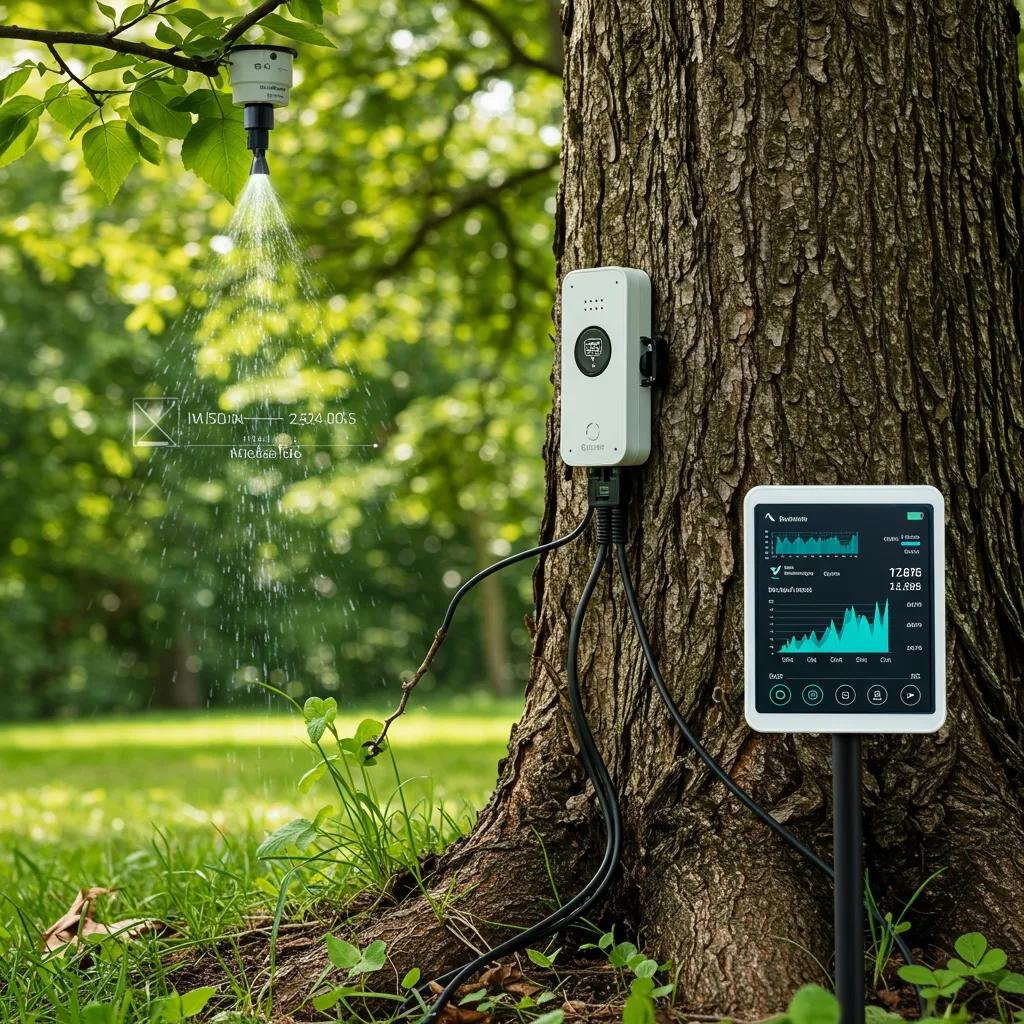
Smart tree health monitoring leverages distributed sensors, image analytics, and AI diagnostics to provide continuous data on moisture, nutrient levels, and visual stress indicators, enabling proactive maintenance instead of reactive fixes. Sensors collect metrics like soil moisture and temperature, while periodic imaging feeds machine-learning models that flag anomalies for arborist review. The process—sensor capture → cloud analysis → prioritized actions—allows managers to schedule irrigation, fertilization, and pruning precisely when data indicates a need, conserving resources and safeguarding tree health. The following sections will explore AI diagnostics, sensor-driven irrigation, and GPS mapping for inventory management.
What Role Do AI Diagnostics Play in Detecting Tree Diseases Early?
AI diagnostics analyze patterns within imagery and sensor data streams to detect subtle, early-stage disease signals that might escape human observation, such as minor shifts in leaf pigment, trends in canopy thinning, or unusual moisture patterns. Machine-learning models, trained on labeled examples of diseases, assign risk scores to trees, enabling arborists to focus interventions where they will yield the greatest benefit. This prioritization optimizes resource allocation and can prevent localized problems from escalating into systemic failures, saving both trees and money through earlier, less invasive treatments.
How Do Sensor-Based Systems Optimize Irrigation and Tree Maintenance?
Sensor-based systems optimize tree care by triggering irrigation and maintenance actions only when plant metrics fall outside predefined target ranges, thereby preventing overwatering and reducing disease risk. Soil moisture probes and nutrient sensors provide data to controllers that operate micro-irrigation systems or schedule manual watering, while long-term sensor histories reveal seasonal trends that inform fertilization timing. The result is measurable water savings, healthier root systems, and a reduced risk of stress-related pest outbreaks. Data-driven maintenance planning also extends the intervals between costly on-site visits.
How Does GPS Mapping Help Property Owners Manage Their Tree Inventory?
GPS/GIS mapping assists property owners in managing their tree inventories by linking each tree to its location, species, inspection history, and intervention records, facilitating prioritization and budgeting. Mapped inventories simplify route planning for service crews, help document condition changes for insurance or municipal compliance, and enable valuation assessments for landscape planning. When integrated with sensor and drone data, GPS mapping becomes the foundation of an auditable, technology-enabled maintenance program that enhances transparency and long-term decision-making.
| Sensor Type | Measured Attribute | Outcome |
|---|---|---|
| Soil moisture probe | Volumetric water content | Targeted irrigation triggers, water savings |
| Temperature / humidity sensor | Microclimate data | Disease-risk timing and frost alerts |
| Multispectral camera | Vegetative indices | Early stress and nutrient deficiency detection |
This mapping clarifies how specific sensor investments translate into operational outcomes and supports the implementation of a monitoring program that delivers measurable benefits. Smart monitoring complements other technologies like drones and LiDAR to create a comprehensive tree care strategy.
What Sustainable Tree Care Innovations Are Shaping the Future of Arboriculture?
Sustainable innovations in arboriculture utilize targeted biological controls, biodegradable application carriers, water-conserving irrigation systems, and fuel-efficient tools to reduce environmental impact while maintaining tree health. The core principle is precision: applying the right treatment, at the right time, in the right place, thereby minimizing inputs and avoiding non-target impacts. These methods align with municipal water restrictions and community environmental goals while delivering effective pest control and improving long-term tree performance. The following sections will explore eco-friendly pest control, water conservation enabled by technology, and how sustainability aligns with local regulations.
How Are Eco-Friendly Pest Control and Biodegradable Products Used in Tree Care?
Eco-friendly pest control employs biological agents, pheromone traps, and targeted low-toxicity formulations to manage threats while preserving beneficial organisms and minimizing soil residue. Biodegradable carriers and micro-dosing techniques reduce persistent chemical loads and support integrated pest management (IPM) strategies that favor long-term ecological balance over aggressive, broad-spectrum treatments. These approaches are highly effective when guided by diagnostic data—such as AI or sensor readings—ensuring treatments target confirmed pest pressure rather than prophylactic blanket spraying.
What Water Conservation Techniques Are Enabled by Advanced Tree Care Technology?
Water conservation techniques include sensor-triggered micro-irrigation, soil moisture-based scheduling, and drought-tolerant mulch practices facilitated by mechanized placement. Sensors prevent overwatering by activating only when moisture thresholds drop, while micro-irrigation reduces runoff and delivers water directly to root zones more efficiently than overhead systems. When combined with mulching and targeted watering, these technologies can significantly decrease landscape water usage while maintaining tree vigor, which is particularly crucial in regions with seasonal water restrictions.
How Do Sustainable Practices Align with Local Regulations and Community Goals?
Sustainable tree care practices often support local environmental ordinances and community initiatives by conserving water, reducing chemical runoff, and protecting native biodiversity. Property owners should verify permit requirements for major removals or treatments, and many municipalities favor contractors who document low-impact approaches. Aligning service choices with community goals can also enhance neighborhood resilience to pests and storms, and it generally improves public perception of necessary arboricultural work.
How Does Automated Stump Grinding Improve Cleanup Speed and Landscape Health?
Automated stump grinding equipment enhances cleanup speed and landscape health by removing roots and stumps more thoroughly and with less disruption than manual excavation. High-efficiency grinders access root collars and grind wood into reusable mulch while maintaining low ground pressure to protect turf and surrounding plantings. The mechanized process shortens restoration timelines and reduces potential pest habitats from decaying stumps, allowing for quicker replanting or site reuse. The following sections will detail the benefits compared to traditional methods, low-impact techniques, and the importance of complete removal for long-term health.
What Are the Benefits of High-Efficiency Stump Grinders Compared to Traditional Methods?
High-efficiency stump grinders remove more of the root crown and reduce residual wood that can harbor pests or cause suckering, resulting in cleaner sites and a lower chance of regrowth. They operate faster than manual digging and avoid the extensive excavation that can compact soil and damage nearby plantings. Because grinders convert most material into mulch, cleanup and reuse of the grindings become part of an efficient restoration workflow. These advantages shorten job timelines and minimize the need for follow-up visits.
How Does Automated Equipment Minimize Landscape Disturbance During Stump Removal?
Automated grinders utilize low-ground-pressure platforms and targeted cutting heads that concentrate force precisely where needed, avoiding broad excavation that can compact soil or harm adjacent root systems. Operators can deploy protective mats and containment measures to prevent debris spread, and precision grinding confines disturbance to the immediate stump area. This targeted approach preserves turf and plantings, reducing post-job restoration costs and maintaining landscape value.
Why Is Complete Stump Removal Important for Long-Term Tree Health?
Complete stump removal eliminates sites that attract wood-boring pests, fungal pathogens, and other pests that exploit decaying wood, preventing their spread to healthy trees. It also removes the potential for suckering and unwanted regrowth that can complicate future landscape plans. By restoring usable space and eliminating biological reservoirs of disease, complete removal supports the long-term health of neighboring trees and reduces ongoing maintenance burdens.
| Grinder Type | Characteristic | Impact |
|---|---|---|
| Compact automated grinder | Low ground pressure | Minimal turf damage, fast access |
| High-efficiency cutting head | Deeper root removal | Lower regrowth and pest risk |
| Integrated containment | Debris control | Cleaner sites and reusable mulch |
This table demonstrates how grinder features translate into homeowner benefits and highlights why selecting capable equipment is crucial when planning stump removal.
How Is Technology Enhancing 24/7 Emergency Tree Services for Port Orange Property Owners?
Technology enhances 24/7 emergency tree services by enabling rapid assessment, optimized dispatch, and faster cleanup through specialized equipment like grapple trucks, chippers, bobcats, and remote assessment drones. The system integrates real-time data and routing with specialized machinery, ensuring crews arrive quickly, assess damage remotely if necessary, and execute removals or stabilization using equipment designed for storm response. For property owners, this translates to reduced hazard exposure, faster restoration of access, and improved documentation for insurance claims. The following sections will list the equipment used in storm response, explain integrated safety protocols, and describe how coordination technology shortens response times.
What Advanced Equipment Enables Rapid Storm Damage Cleanup?
Rapid storm cleanup relies on grapple trucks for swift loading and hauling of limbs, chippers to reduce green waste volume, cranes or bobcats for heavy-lift tasks, and compact loaders for debris staging. Grapple trucks combine cutting, grabbing, and hauling functions, dramatically accelerating the removal of downed material, while chippers process branches into mulch on-site to decrease haul volume. Bobcats and loaders assist in safely moving uprooted material, enabling quicker clearance of driveways and public access routes. Prioritizing the right equipment for each scenario speeds up recovery and reduces secondary hazards from debris piles.
How Do Safety Protocols Integrate with Modern Tools During Emergency Tree Work?
Safety protocols are integrated with modern tools through a staged operating procedure: remote assessment (often using drones) identifies hazards, crews establish exclusion zones and traffic control, machines perform controlled removal and stabilization, and debris is consolidated for hauling. Communication systems and digital reporting maintain situational awareness as crews rotate, and standardized handovers ensure continuity across shifts. These protocols, when paired with appropriate equipment, minimize on-site surprises and maintain worker and public safety during urgent operations.
How Does Technology Improve Coordination and Response Times in Urgent Tree Services?
Technology enhances coordination and response times through GPS-enabled dispatch, pre-mapped inventories that identify high-priority properties, and crew coordination apps that track status and resource needs in real time. Optimized routing shortens travel times during high-demand events, and digital reporting expedites invoicing and insurance documentation post-emergency. Pre-established technology workflows enable providers to triage effectively and allocate specialized equipment where it can have the most immediate impact.
After explaining how modern equipment speeds storm cleanup and emergency response, homeowners should be aware of local emergency service options. Volusia Bobcat & Tree Service LLC offers 24/7 emergency services, rapid storm damage cleanup, and debris hauling through Volusia Grapple Service to serve Port Orange and Volusia County property owners, leveraging technology and specialized equipment to reduce response times and restore safety. (florida-tree-service.com)
- Key technologies supporting emergency response include GPS dispatch, drone assessment, grapple trucks, chippers, bobcats, and crane support.
- Technology enables faster triage, safer removal, and more efficient hauling during storm events.
- Local providers that combine advanced equipment with trained crews deliver the most reliable emergency outcomes.
- Emergency response hinges on rapid assessment and the appropriate equipment for controlled removals.
- Coordination tools and mapping reduce travel and triage delays during high-demand periods.
- Debris hauling and chipping minimize site congestion and allow for quicker restoration of usable space.
These lists and procedural descriptions should help homeowners prepare for emergency scenarios and select providers who combine technological readiness with operational expertise.
This article has explored the major trends in tree care technology—covering the benefits of modern equipment, drone inspections, advanced removal methods, AI and sensors for monitoring, sustainable innovations, automated stump grinding, and technology-enhanced emergency services—with practical connections drawn between tools and homeowner value. By emphasizing data-driven decisions, remote assessment, mechanization, and low-impact practices, property owners and managers can achieve safer, faster, and more sustainable tree care solutions in Port Orange and Volusia County. For those seeking local, technology-driven services for removal, trimming, stump grinding, drone inspections, or emergency response, Volusia Bobcat & Tree Service LLC offers these capabilities and can be reached at 386-675-7898 for service inquiries or to schedule an inspection. (florida-tree-service.com)
Frequently Asked Questions
What types of trees benefit most from drone inspections?
Drone inspections are particularly beneficial for large, mature trees and those situated in hard-to-reach locations. Species with complex canopies, such as oaks and maples, can be effectively assessed for health issues without requiring climbers. Drones can swiftly identify signs of stress, disease, or structural weaknesses, making them ideal for monitoring trees in urban settings or near power lines where safety is paramount. This technology facilitates timely interventions, ultimately preserving tree health and ensuring safety.
How can property owners choose the right tree care technology provider?
When selecting a tree care technology provider, property owners should consider several key factors. Look for companies that utilize modern equipment, including drones and automated stump grinders, and possess a proven track record of safety and efficiency. Verify their certifications, review customer testimonials, and assess the breadth of services offered. Additionally, inquire about their commitment to sustainability and how they integrate technology into their practices. A provider that prioritizes both innovation and environmental responsibility is likely to deliver the best long-term results.
What are the long-term benefits of using AI in tree health monitoring?
AI in tree health monitoring offers significant long-term advantages by enabling proactive care and early disease detection. By analyzing data from sensors and imagery, AI can identify patterns indicative of stress or disease before they become critical. This allows arborists to implement targeted interventions, reducing the need for costly emergency treatments. Over time, this approach leads to healthier trees, extended lifespans, and lower maintenance costs, ultimately enhancing the overall value of the property.
How do automated stump grinders compare to traditional methods in terms of environmental impact?
Automated stump grinders present a more environmentally sound alternative to traditional methods due to minimized soil disturbance and a reduced risk of pest infestations. Unlike manual digging, which can compact soil and damage nearby roots, automated grinders operate with low ground pressure and precision. They also convert stump material into mulch, which can be reused on-site, promoting sustainability. This efficiency not only accelerates the cleanup process but also contributes to healthier landscapes by preventing the spread of diseases associated with decaying stumps.
What role does GPS technology play in tree care services?
GPS technology plays a vital role in modern tree care services by enhancing operational efficiency and accuracy. It enables precise mapping of tree inventories, allowing service providers to prioritize maintenance and inspections based on location and condition. During emergency responses, GPS optimizes crew routing, significantly reducing response times. Furthermore, it aids in documenting service history and ensuring compliance with local regulations, providing property owners with a clear record of the care and maintenance performed on their trees.
How can homeowners ensure their tree care practices are sustainable?
Homeowners can ensure their tree care practices are sustainable by selecting providers who employ eco-friendly methods and technologies. This includes opting for biodegradable products for pest control, implementing water conservation techniques, and choosing precision tools that minimize chemical usage. Regular monitoring of tree health through advanced technologies like AI and sensors can also inform decisions that align with environmental goals. Engaging in community initiatives and adhering to local regulations further supports sustainable practices in tree care.